He Changes Times And Seasons › Daniel 11
CHAPTER 11
Kings of the North and the South
History written in advance, down to the time of the end
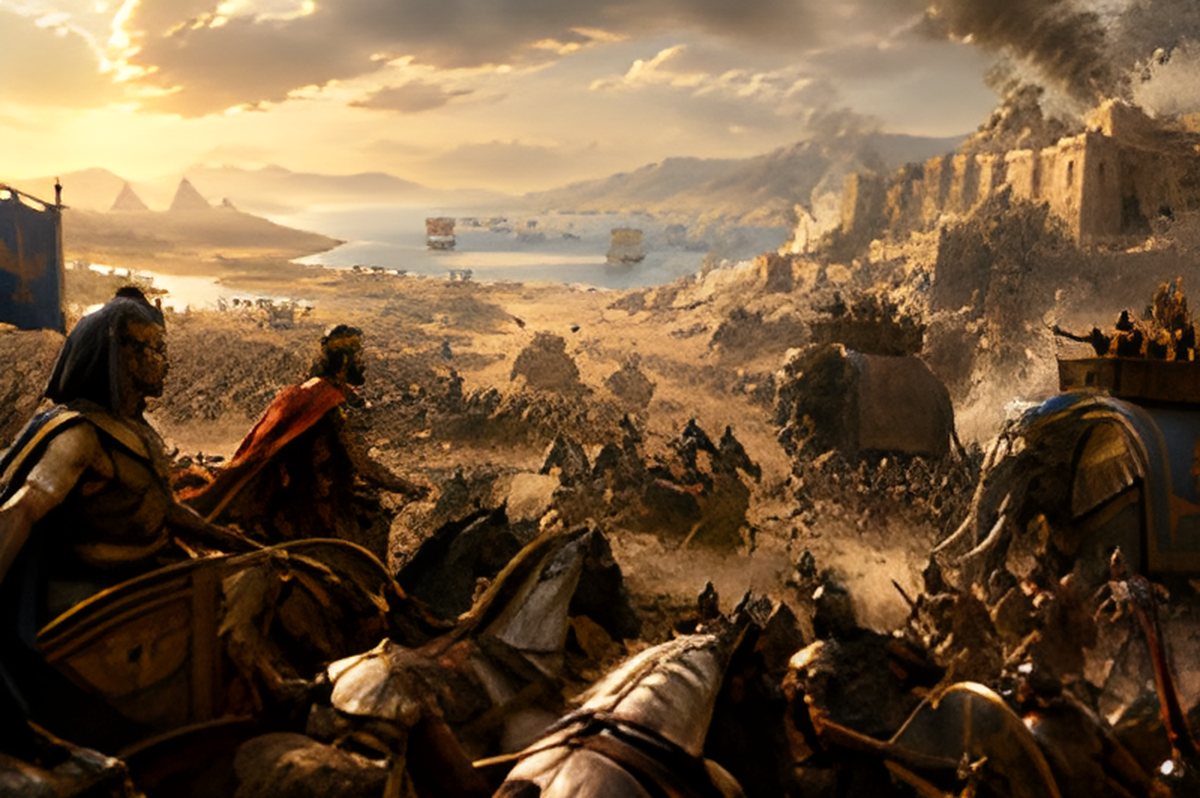
Chapter 11 is the most detailed prophecy in the Bible. In forty-five verses it describes the history of the Persian, Greek, Ptolemaic, and Seleucid empires with such precision that skeptics have long argued it must have been written after the events. Conservative scholars accept the book’s claim that Daniel wrote it in the sixth century B.C. and that the accuracy shows divine foreknowledge. The chapter starts with ancient history, moves to the tyrant Antiochus IV Epiphanes, and then, in verse 36, shifts to a final king who fits no earlier ruler.
The “king of the south” is the Ptolemaic dynasty of Egypt and the “king of the north” is the Seleucid dynasty of Syria. Israel lies between them and is trampled by both. The angel’s message to Daniel is that the land and people he loves will be caught in these conflicts, but God knows the whole outcome.
Persia and the Mighty King of Greece
DANIEL 11:1–4
1And as for me, in the first year of Darius the Mede, I stood up to confirm and strengthen him.
2And now will I show thee the truth. Behold, there shall stand up yet three kings in Persia; and the fourth shall be far richer than they all: and when he is waxed strong through his riches, he shall stir up all against the realm of Greece.
3And a mighty king shall stand up, that shall rule with great dominion, and do according to his will.
4And when he shall stand up, his kingdom shall be broken, and shall be divided toward the four winds of heaven, but not to his posterity, nor according to his dominion wherewith he ruled; for his kingdom shall be plucked up, even for others besides these.
The angel recalls that in the first year of Darius the Mede he stood to confirm and strengthen him. Now he reveals: Behold, there shall stand up yet three kings in Persia; and the fourth shall be far richer than they all: and when he is waxed strong through his riches, he shall stir up all against the realm of Greece. The fourth king is generally identified as Xerxes I (the Ahasuerus of Esther), who assembled a huge army against Greece in 480 B.C.
Then a mighty king shall stand up, that shall rule with great dominion, and do according to his will. And when he shall stand up, his kingdom shall be broken, and shall be divided toward the four winds of heaven; and not to his posterity, nor according to his dominion which he ruled. This is Alexander the Great, who died at thirty-two, and whose empire was divided among four generals rather than passing to his heirs.
The First Conflicts Between South and North
DANIEL 11:5–9
5And the king of the south shall be strong, and one of his princes; and he shall be strong above him, and have dominion; his dominion shall be a great dominion.
6And at the end of years they shall join themselves together; and the daughter of the king of the south shall come to the king of the north to make an agreement: but she shall not retain the strength of her arm; neither shall he stand, nor his arm; but she shall be given up, and they that brought her, and he that begat her, and he that strengthened her in those times.
7But out of a shoot from her roots shall one stand up in his place, who shall come unto the army, and shall enter into the fortress of the king of the north, and shall deal against them, and shall prevail.
8And also their gods, with their molten images, and with their goodly vessels of silver and of gold, shall he carry captive into Egypt; and he shall refrain some years from the king of the north.
9And he shall come into the realm of the king of the south, but he shall return into his own land.
The king of the south shall be strong (Ptolemy I Soter), but one of his princes shall be strong above him and have dominion (Seleucus I Nicator). At the end of years they shall join themselves together; and the daughter of the king of the south shall come to the king of the north to make an agreement (Berenice, daughter of Ptolemy II, married Antiochus II about 250 B.C.). But she shall not retain the strength of her arm, neither shall he stand, nor his arm; she shall be given up, and they that brought her, and he that begat her, and he that strengthened her in those times.
A branch from her roots shall stand up in his place (her brother Ptolemy III Euergetes), who shall come to the army and enter into the stronghold of the king of the north, and shall deal against them, and shall prevail. He shall carry captive into Egypt their gods, with their molten images and their goodly vessels of silver and of gold. Each detail matches the record of the third century B.C.
Antiochus the Great and the Rise of Rome
DANIEL 11:10–19
10And his sons shall war, and shall assemble a multitude of great forces, which shall come on, and overflow, and pass through; and they shall return and war, even to his fortress.
11And the king of the south shall be moved with anger, and shall come forth and fight with him, even with the king of the north; and he shall set forth a great multitude, and the multitude shall be given into his hand.
12And the multitude shall be lifted up, and his heart shall be exalted; and he shall cast down tens of thousands, but he shall not prevail.
13And the king of the north shall return, and shall set forth a multitude greater than the former; and he shall come on at the end of the times, even of years, with a great army and with much substance.
14And in those times there shall many stand up against the king of the south: also the children of the violent among thy people shall lift themselves up to establish the vision; but they shall fall.
15So the king of the north shall come, and cast up a mound, and take a well-fortified city: and the forces of the south shall not stand, neither his chosen people, neither shall there be any strength to stand.
16But he that cometh against him shall do according to his own will, and none shall stand before him; and he shall stand in the glorious land, and in his hand shall be destruction.
17And he shall set his face to come with the strength of his whole kingdom, and with him equitable conditions; and he shall perform them: and he shall give him the daughter of women, to corrupt her; but she shall not stand, neither be for him.
18After this shall he turn his face unto the isles, and shall take many: but a prince shall cause the reproach offered by him to cease; yea, moreover, he shall cause his reproach to turn upon him.
19Then he shall turn his face toward the fortresses of his own land; but he shall stumble and fall, and shall not be found.
The sons of the king of the north (Seleucus III and Antiochus III the Great) assemble a great multitude. Antiochus III pushes south and is defeated by Ptolemy IV at Raphia in 217 B.C. but returns some years later with a larger army and defeats Egypt at Panium in 200 B.C., gaining control of the glorious land, which was in his hand to be destroyed (v. 16).
He then turns his face unto the isles and takes many, but a prince (the Roman general Scipio) shall cause the reproach offered by him to cease; yea, moreover, he shall cause his reproach to turn upon him (Magnesia, 190 B.C.). Then he shall turn his face toward the fortresses of his own land: but he shall stumble and fall, and shall not be found, a reference to Antiochus’s death while plundering a temple in Elam in 187 B.C. In these verses we see that Rome is already waiting in the wings.
The Contemptible Person
DANIEL 11:20–28
20Then shall stand up in his place one that shall cause an exactor to pass through the glory of the kingdom; but within few days he shall be destroyed, neither in anger, nor in battle.
21And in his place shall stand up a contemptible person, to whom they had not given the honor of the kingdom: but he shall come in time of security, and shall obtain the kingdom by flatteries.
22And the overwhelming forces shall be overwhelmed from before him, and shall be broken; yea, also the prince of the covenant.
23And after the league made with him he shall work deceitfully; for he shall come up, and shall become strong, with a small people.
24In time of security shall he come even upon the fattest places of the province; and he shall do that which his fathers have not done, nor his fathers’ fathers; he shall scatter among them prey, and spoil, and substance: yea, he shall devise his devices against the strongholds, even for a time.
25And he shall stir up his power and his courage against the king of the south with a great army; and the king of the south shall war in battle with an exceeding great and mighty army; but he shall not stand; for they shall devise devices against him.
26Yea, they that eat of his dainties shall destroy him, and his army shall overflow; and many shall fall down slain.
27And as for both these kings, their hearts shall be to do mischief, and they shall speak lies at one table: but it shall not prosper; for yet the end shall be at the time appointed.
28Then shall he return into his land with great substance; and his heart shall be against the holy covenant; and he shall do his pleasure, and return to his own land.
Seleucus IV Philopator sends a tax collector through the glorious kingdom and is destroyed within a few days, neither in anger nor in battle (v. 20). In his place stands up a contemptible person, to whom they had not given the honor of the kingdom; he comes in without warning and obtains the kingdom by flatteries. This is Antiochus IV Epiphanes (175-164 B.C.), who seized the throne from the rightful heir.
Even the prince of the covenant is broken (a reference to the murder of the high priest Onias III). He works deceitfully, and becomes strong with a small people. His first campaign against Egypt succeeds, but the two kings speak lies at one table and their schemes do not prosper, for the end is yet for the time appointed. On his return he sets his heart against the holy covenant and does his pleasure.
Ships from Kittim and the Abomination
DANIEL 11:29–35
29At the time appointed he shall return, and come into the south; but it shall not be in the latter time as it was in the former.
30For ships of Kittim shall come against him; therefore he shall be grieved, and shall return, and have indignation against the holy covenant, and shall do his pleasure: he shall even return, and have regard unto them that forsake the holy covenant.
31And forces shall stand on his part, and they shall profane the sanctuary, even the fortress, and shall take away the continual burnt-offering, and they shall set up the abomination that maketh desolate.
32And such as do wickedly against the covenant shall he pervert by flatteries; but the people that know their God shall be strong, and do exploits.
33And they that are wise among the people shall instruct many; yet they shall fall by the sword and by flame, by captivity and by spoil, many days.
34Now when they shall fall, they shall be helped with a little help; but many shall join themselves unto them with flatteries.
35And some of them that are wise shall fall, to refine them, and to purify, and to make them white, even to the time of the end; because it is yet for the time appointed.
At the time appointed he returns toward the south, but it shall not be as the former or as the latter. For ships of Kittim shall come against him: therefore he shall be grieved, and shall return, and have indignation against the holy covenant. In 168 B.C. the Roman envoy Popilius Laenas drew a circle in the sand around Antiochus and demanded his answer before he stepped out of it. Antiochus withdrew from Egypt in humiliation and turned his rage against Jerusalem.
His forces profane the sanctuary, even the fortress, and take away the continual burnt offering; and they set up the abomination that maketh desolate (the altar to Zeus in the temple in December 167 B.C.). Such as do wickedly against the covenant shall he pervert by flatteries: but the people that know their God shall be strong, and do exploits. They that are wise among the people shall instruct many; yet they shall fall by the sword and by flame, by captivity and by spoil, many days. Now when they shall fall, they shall be helped with a little help (the Maccabean revolt); but many shall join themselves unto them with flatteries. Some of the wise shall fall, to refine them, and to purify, and to make them white, even to the time of the end: because it is yet for the time appointed.
The Willful King
DANIEL 11:36–39
36And the king shall do according to his will; and he shall exalt himself, and magnify himself above every god, and shall speak marvellous things against the God of gods; and he shall prosper till the indignation be accomplished; for that which is determined shall be done.
37Neither shall he regard the gods of his fathers, nor the desire of women, nor regard any god; for he shall magnify himself above all.
38But in his place shall he honor the god of fortresses; and a god whom his fathers knew not shall he honor with gold, and silver, and with precious stones and pleasant things.
39And he shall deal with the strongest fortresses by the help of a foreign god: whosoever acknowledgeth him he will increase with glory; and he shall cause them to rule over many, and shall divide the land for a price.
From verse 36 the language no longer fits Antiochus. The king shall do according to his will; and he shall exalt himself, and magnify himself above every god, and shall speak marvellous things against the God of gods; and he shall prosper till the indignation be accomplished; for that which is determined shall be done. Antiochus never claimed to be above all gods, and he did not live until the “time of the end” as defined in chapter 12. For this reason most conservative interpreters see a shift here to the final Antichrist, the little horn of chapter 7 and the prince of chapter 9.
He shall regard neither the gods of his fathers, nor the desire of women, nor any god: for he shall magnify himself above all. But in his place shall he honor the god of fortresses, a god whom his fathers knew not; he shall honor with gold, silver, precious stones, and pleasant things. Paul describes the same figure in 2 Thessalonians 2:3-4 as the man of sin who opposes and exalts himself above all that is called God.
The Last Campaign and the End of the Willful King
DANIEL 11:40–45
40And at the time of the end shall the king of the south contend with him; and the king of the north shall come against him like a whirlwind, with chariots, and with horsemen, and with many ships; and he shall enter into the countries, and shall overflow and pass through.
41He shall enter also into the glorious land, and many countries shall be overthrown; but these shall be delivered out of his hand: Edom, and Moab, and the chief of the children of Ammon.
42He shall stretch forth his hand also upon the countries; and the land of Egypt shall not escape.
43But he shall have power over the treasures of gold and of silver, and over all the precious things of Egypt; and the Libyans and the Ethiopians shall be at his steps.
44But tidings out of the east and out of the north shall trouble him; and he shall go forth with great fury to destroy and utterly to sweep away many.
45And he shall plant the tents of his palace between the sea and the glorious holy mountain; yet he shall come to his end, and none shall help him.
At the time of the end the king of the south pushes at him, and the king of the north comes against him like a whirlwind, with chariots, horsemen, and many ships; he enters into the countries, overflows, and passes through. He enters also into the glorious land, and many countries are overthrown; but these shall escape out of his hand: Edom, Moab, and the chief of the children of Ammon. He stretches forth his hand also upon the countries, and the land of Egypt does not escape. He has power over the treasures of gold and silver, and over all the precious things of Egypt, and the Libyans and the Ethiopians follow at his steps.
But tidings out of the east and out of the north trouble him, and he goes forth with great fury to destroy and utterly to sweep away many. He plants the tents of his palace between the sea and the glorious holy mountain; yet he comes to his end, and none helps him. The final ruler comes to his end on the very ground he coveted, and no one stands beside him. Compare Revelation 19:19-20, where the beast is captured and cast into the lake of fire.
Discussion Questions
- How does the accuracy of this chapter strengthen your trust in the Bible?
- What portrait of Antiochus IV appears in verses 21–35, and how does he foreshadow the Antichrist?
- What does verse 32 promise to those who know their God?
- How do you stay steady when history looks chaotic?