He Changes Times And Seasons › Daniel 1
CHAPTER 1
Faithful in Babylon
Purpose in the heart before the pressure arrives
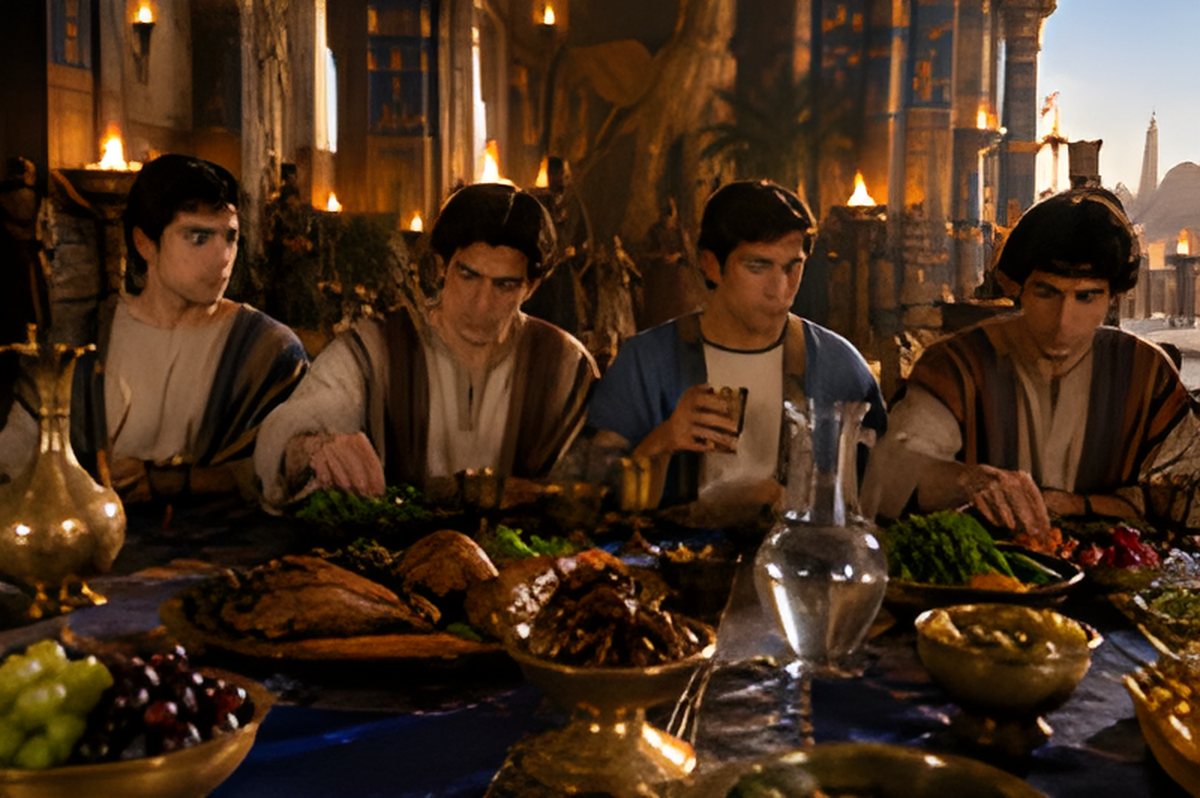
The book of Daniel opens in 605 B.C., in the first wave of Judah’s captivity. A nation has lost its temple treasures, its king, and its best young men, yet the first chapter quietly announces the thesis of the whole book: the Lord is still on the throne, and nothing happens in Babylon that He did not first permit. Notice the repeated phrase “the Lord gave” in verse 2 and again in verse 9; the hand behind history is never Nebuchadnezzar’s.
Chapter 1 is the training ground. Before Daniel ever interprets a dream or faces a lion, he settles a small question about food. The pattern is plain: faithfulness in the little decisions prepares a servant of God for the great ones.
The Siege and the Sacred Vessels
DANIEL 1:1–2
1In the third year of the reign of Jehoiakim king of Judah came Nebuchadnezzar king of Babylon unto Jerusalem, and besieged it.
2And the Lord gave Jehoiakim king of Judah into his hand, with part of the vessels of the house of God; and he carried them into the land of Shinar to the house of his god: and he brought the vessels into the treasure-house of his god.
Daniel dates the opening scene to the third year of Jehoiakim, which fits the first Babylonian campaign against Jerusalem in 605 B.C. (Jeremiah counts the same year from Babylon’s side, which is why the two reckonings differ by a year). Nebuchadnezzar was then crown prince and commander; he soon became king when his father Nabopolassar died.
The key theological statement is that the Lord delivered Jehoiakim into the king’s hand. Jerusalem did not fall because Babylon’s gods were stronger. It fell because Judah had broken covenant, exactly as Moses, Isaiah, and Jeremiah had warned. Part of the temple vessels went to the land of Shinar, the old plain of Babel, and into the treasury of Nebuchadnezzar’s god. To the pagan mind that was a victory of Marduk over Jehovah. To Daniel’s readers it was discipline from a faithful Father.
Chosen for the King’s Service, Renamed for His Gods
DANIEL 1:3–7
3And the king spake unto Ashpenaz the master of his eunuchs, that he should bring in certain of the children of Israel, even of the seed royal and of the nobles;
4youths in whom was no blemish, but well-favored, and skilful in all wisdom, and endued with knowledge, and understanding science, and such as had ability to stand in the king’s palace; and that he should teach them the learning and the tongue of the Chaldeans.
5And the king appointed for them a daily portion of the king’s dainties, and of the wine which he drank, and that they should be nourished three years; that at the end thereof they should stand before the king.
6Now among these were, of the children of Judah, Daniel, Hananiah, Mishael, and Azariah.
7And the prince of the eunuchs gave names unto them: unto Daniel he gave the name of Belteshazzar; and to Hananiah, of Shadrach; and to Mishael, of Meshach; and to Azariah, of Abed-nego.
Ashpenaz, the chief of the court officials, was told to select young men of royal or noble descent, without blemish, quick in wisdom and learning, able to stand in the palace. Babylon wanted the finest minds of the conquered nation and meant to reshape them: three years of instruction in the language and literature of the Chaldeans, and a daily allotment from the king’s own table.
Then came the renaming. Daniel (“God is my judge”) became Belteshazzar, a name invoking Bel. Hananiah (“Jehovah is gracious”) became Shadrach, Mishael (“Who is what God is?”) became Meshach, and Azariah (“Jehovah has helped”) became Abednego, “servant of Nebo.” Every Hebrew name carried the name of the true God. The new names were designed to erase it. Babylon’s strategy was re-education: change the diet, the language, the name, and eventually the worship will follow.
A Purpose in the Heart
DANIEL 1:8–10
8But Daniel purposed in his heart that he would not defile himself with the king’s dainties, nor with the wine which he drank: therefore he requested of the prince of the eunuchs that he might not defile himself.
9Now God made Daniel to find kindness and compassion in the sight of the prince of the eunuchs.
10And the prince of the eunuchs said unto Daniel, I fear my lord the king, who hath appointed your food and your drink: for why should he see your faces worse looking than the youths that are of your own age? so would ye endanger my head with the king.
Daniel purposed in his heart that he would not defile himself. The verb describes a settled decision made before the test. Why the king’s food? It was likely offered first to idols, it may have included meats forbidden by the Law, and to eat the king’s table was to swear allegiance to the king’s gods and to the king’s patronage.
Notice how Daniel acts. He does not stage a protest. He asks the official respectfully, and God had already granted him favor and compassion with Ashpenaz. The official’s fear is honest and human: if you look worse than the others, the king will have my head. Courage and courtesy are not opposites. Daniel keeps both.
The Ten-Day Test
DANIEL 1:11–16
11Then said Daniel to the steward whom the prince of the eunuchs had appointed over Daniel, Hananiah, Mishael, and Azariah:
12Prove thy servants, I beseech thee, ten days; and let them give us pulse to eat, and water to drink.
13Then let our countenances be looked upon before thee, and the countenance of the youths that eat of the king’s dainties; and as thou seest, deal with thy servants.
14So he hearkened unto them in this matter, and proved them ten days.
15And at the end of ten days their countenances appeared fairer, and they were fatter in flesh, than all the youths that did eat of the king’s dainties.
16So the steward took away their dainties, and the wine that they should drink, and gave them pulse.
Daniel turns to the steward over the four men and proposes a trial: ten days of vegetables (plant food, grains, and seeds) and water, then compare appearances. The proposal is modest, fair, and measurable. He does not demand a miracle; he places himself and his friends in God’s hands and lets the outcome speak.
At the end of ten days the four looked healthier and better nourished than all who ate the king’s food, and the steward continued to give them the vegetables. This is not a verse about vegetarian diets as a spiritual law. It is a verse about obedience: when God’s people refuse to compromise, He supplies what the compromise promised.
God Gave Them Knowledge and Skill
DANIEL 1:17–21
17Now as for these four youths, God gave them knowledge and skill in all learning and wisdom: and Daniel had understanding in all visions and dreams.
18And at the end of the days which the king had appointed for bringing them in, the prince of the eunuchs brought them in before Nebuchadnezzar.
19And the king communed with them; and among them all was found none like Daniel, Hananiah, Mishael, and Azariah: therefore stood they before the king.
20And in every matter of wisdom and understanding, concerning which the king inquired of them, he found them ten times better than all the magicians and enchanters that were in all his realm.
21And Daniel continued even unto the first year of king Cyrus.
Verse 17 is the hinge of the chapter: God gave the four young men learning and skill in all literature and wisdom, and Daniel in particular understanding in all visions and dreams. They studied Babylonian learning, but their gift came from above. At the end of the training the king examined them himself and found them ten times better than all the magicians and enchanters in his whole realm.
The chapter closes with a quiet remark: Daniel continued until the first year of King Cyrus, which is 539 to 538 B.C. Empires rose and fell across those sixty-odd years, and Daniel outlasted the one that had carried him off. The man who purposed in his heart at the beginning is still faithful at the end.
Discussion Questions
- What pressures in your own life are meant to “rename” you, and how can you hold to your identity in Christ?
- Daniel purposed in his heart before the test. What decisions do you need to settle in advance?
- How did Daniel combine firm conviction with respectful courtesy toward Ashpenaz?
- Where do you see the hand of God at work in a story that begins with defeat?